
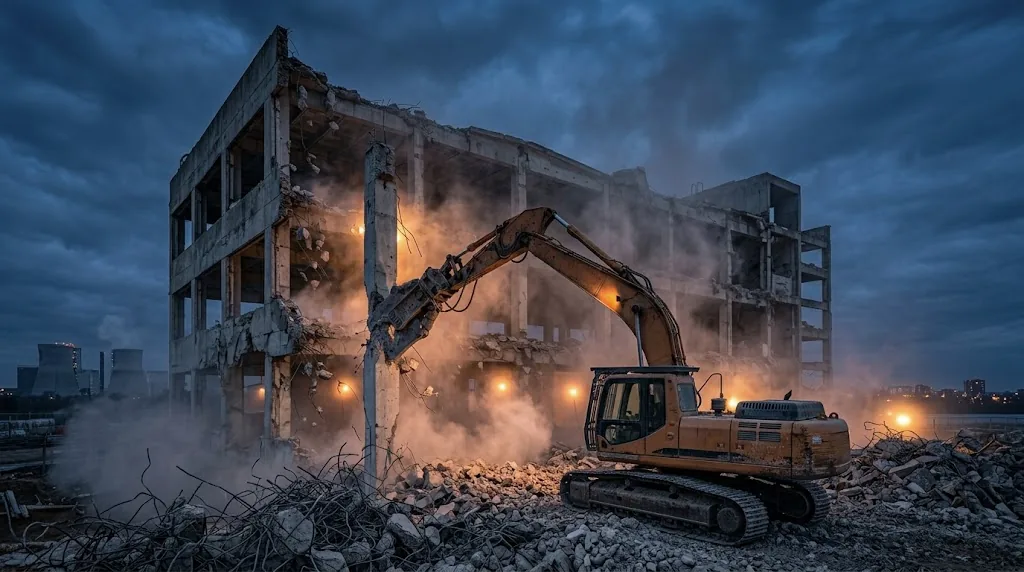
Demolition Estimating Services
Demolition estimates that account for every load out
Selective interior demo or full building removal, we quantify what comes out, how much it weighs, how it leaves the site, and what it costs to dispose of it.
Overview
What this service covers
Demolition pricing depends on details that are easy to overlook: debris volume and weight, number of dumpster pulls or truck loads, disposal fees by material, and protection of what stays. We build each of these from the demolition plans and existing-conditions information you provide.
We separate selective demolition, structural demolition, and site demolition so the scope is easy to review and easy to adjust if the owner changes what stays.
Projects and contractors we support
- Interior strip-outs and tenant demo
- Selective demolition for renovations
- Full building demolition
- Site demolition: paving, curbs, utilities
- Roof tear-offs
- Concrete and slab removal
Typical clients:
- Demolition contractors
- General contractors pricing renovations
- Abatement and environmental subcontractors
- Owners and developers
Scope of work
Scope is confirmed in your proposal after we review the drawings. A typical engagement includes:
- Removal quantities by material
- Debris volume and weight estimates
- Haul-off loads and disposal fees
- Salvage and recycling credits as applicable
- Temporary protection and shoring allowances
- Equipment and labor crews
- Utility disconnect coordination items
- Hazardous material allowances where identified by survey
Typical deliverables
Demolition estimate
Labor, equipment, haul-off, and disposal pricing by area.
Demo plan markups
Highlighted sheets showing removal areas and items.
Debris summary
Estimated volumes and loads by material type.
Exclusions list
Clear notes on hazardous materials and items by others.
Trades and construction divisions
Organized using CSI MasterFormat where it fits your bid, or by your own cost codes.
- 02Existing Conditions
- 0241 Demolition
- 03Concrete removal
- 31Earthwork
- 32Paving removal
- 33Utility removal
Software and methods
We measure on scaled drawings with digital takeoff tools and deliver editable spreadsheets. Tools used on this service typically include:
- Bluebeam Revu
- PlanSwift
- Microsoft Excel
Our workflow
- Request a quoteSend a short request through our quote form, then email your drawings or share a download link.
- Project reviewAn estimator reviews the documents, confirms scope, trades, and level of detail, and lists any questions about the drawings.
- Receive proposalYou get a written proposal with scope, deliverables, fee, and a delivery date confirmed for your project.
- Estimating & quality checkWe complete the takeoff and estimate, then a second review checks quantities, pricing, and assumptions.
- Final deliveryYou receive the editable estimate, marked-up drawings, and summary, and we answer follow-up questions.
Benefits for contractors
Disposal costs captured
Haul-off and tipping fees are often where demo bids go wrong.
Protection included
Temporary protection of existing work is priced, not assumed.
Clear demo scope
Selective, structural, and site demolition are separated.
Easy to adjust
If the owner keeps or removes more, update by area.
Frequently asked questions
Do you price hazardous material abatement?
We include allowances or line items only where a hazardous materials survey identifies quantities. Abatement work itself should be priced by a licensed abatement contractor; we note it as an exclusion or allowance.
What information do you need?
Demolition plans, existing drawings if available, and photos are ideal. A site walk report or survey helps with hidden conditions.
Can you include salvage or recycling?
Yes. We can note salvage items and recycling streams; credits are applied only where you provide local values.
Related services
Often paired with demolition estimating



Start a project
Ready to price your project?
Send your drawings for demolition estimating. We review every plan set before quoting so your proposal reflects the actual scope.